
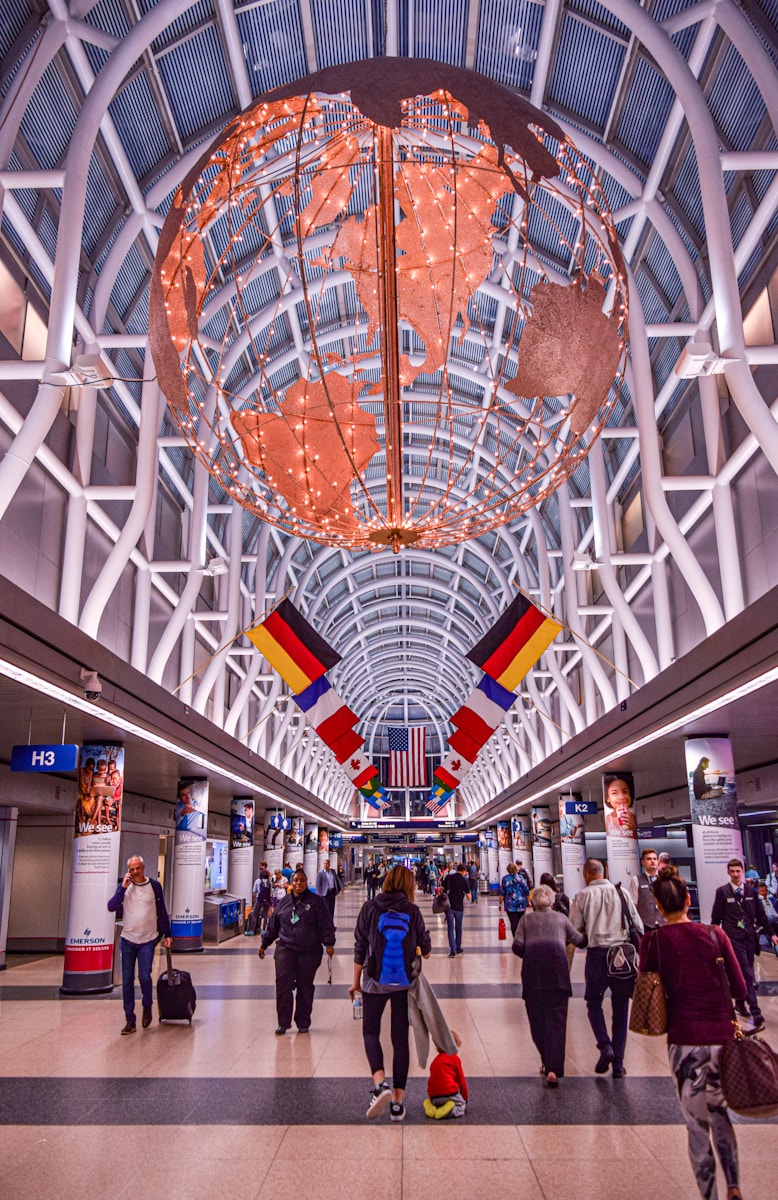
Why Global Mobility Now Demands Tailored Solutions
International relocation and lifestyle services are no longer a discretionary benefit reserved for executives or ultra-high-net-worth individuals. In today’s hyper-connected world, they have become a core infrastructure for people who value time, clarity, and long-term quality of life.
Global mobility has entered a new phase—defined by complexity, speed, and continuity. Modern expatriates operate across multiple countries, careers, families, legal systems, and asset structures simultaneously. As a result, expectations toward professional support have fundamentally shifted.
The Market Shift: A Structural Change in Global Mobility
International migration remains structurally high
According to the OECD International Migration Outlook 2024 and 2025, permanent migration flows to OECD countries remain close to historic highs, with approximately 6.2 million new permanent migrants recorded in 2024—around 15% higher than pre-pandemic levels (2019).
This confirms that global mobility has not “returned to normal” after COVID-19. Instead, it has reset to a higher structural baseline.
Source:
OECD – International Migration Outlook 2025
Expat mobility is increasingly multi-dimensional
OECD data shows that international migration today is driven by multiple, overlapping motivations:
- Family reunification (≈44%)
- Employment and career mobility (≈17%)
- Education, lifestyle, and humanitarian factors
This reflects a critical shift: relocation is no longer a single event, but an ongoing life configuration involving housing, schooling, healthcare, taxation, and daily logistics across borders.
The Rise of the Modern Expat and Digital Mobility
Expat populations continue to grow globally
Current estimates indicate that expatriates now represent approximately 3.6% of the global population, the highest level ever recorded. Europe and Asia together host more than 60% of the world’s expat population, with strong intra-regional mobility, especially within the EU.
This trend confirms that international movement is increasingly regional, repeatable, and lifestyle-driven, rather than purely career-driven.
Source:
OECD Migration Data & EU Mobility Reports
Remote work and digital nomadism reshape relocation needs
The expansion of remote and hybrid work has introduced a new category of globally mobile professionals. According to international labor and migration studies, tens of millions of professionals now live and work across borders without traditional expatriate contracts.
In response, governments are introducing digital nomad visas and flexible residence frameworks, transforming relocation from a corporate process into a personal and lifestyle-centric decision.
Source:
OECD – Remote Work & Mobility Analysis
Why Tailored Relocation and Lifestyle Services Are Now Essential
Complexity has increased while time has decreased
Modern expatriates face:
- Rapidly changing immigration and compliance rules
- Housing shortages and volatile rental markets
- Cross-border taxation and financial planning challenges
- Education and healthcare access in unfamiliar systems
- Cultural integration and daily life management
Standardized relocation packages are no longer sufficient. What clients require today is continuous, adaptive support—not a checklist.
From “relocation service” to operational life infrastructure
Personalized relocation and lifestyle management has evolved from a comfort-driven offering into a daily operational necessity.
Effective solutions today are:
- Client-centric, not policy-centric
- Locally embedded, not generic
- Scalable and long-term, not one-off
This shift mirrors how mobility itself has evolved—from movement between countries to living across systems.
The Strategic Role of a Global Relocation Network
Local relevance within a global framework
The most effective relocation models combine:
- Global standards and systems
- Deep local expertise
- Operational continuity across countries
This structure allows service providers to adapt to territorial regulations, cultural norms, and market realities, while maintaining consistent quality and governance.
From service provider to long-term partner
Being part of a global relocation and lifestyle network means becoming a long-term operational partner, not just a logistics coordinator.
Clients gain:
- Clarity and time
- Discretion and reliability
- A single point of coordination for complex lives
Partners build:
- A scalable, high-value business
- Recurring client relationships
- Institutional support through brand, systems, and operational guidance
Conclusion: The New Standard of Global Living
International mobility is no longer an exception—it is a defining feature of modern life. As migration flows remain high and lifestyles become increasingly transnational, tailored relocation and lifestyle services are now a strategic necessity.
The future of relocation is not about moving people.
It is about structuring lives across borders.
frequently asked questions
Tailored relocation and lifestyle services provide personalized, ongoing support for individuals and families living across countries, covering housing, immigration, education, healthcare, and daily life management.
Because modern expatriates face complex legal, financial, and lifestyle challenges across borders, professional relocation support has become essential for efficiency, compliance, and quality of life.
Global mobility has shifted toward multi-country living, remote work, and long-term international lifestyles, supported by historically high migration flows and flexible work models.
Beyond corporate executives, these services are used by entrepreneurs, remote professionals, families, investors, and globally mobile individuals seeking stability and continuity.
A global network ensures consistent service quality, shared systems, and local expertise, allowing clients to receive seamless support across multiple countries.
By reducing complexity, saving time, ensuring compliance, and managing daily logistics, relocation and lifestyle services allow clients to focus on career, family, and personal well-being.