
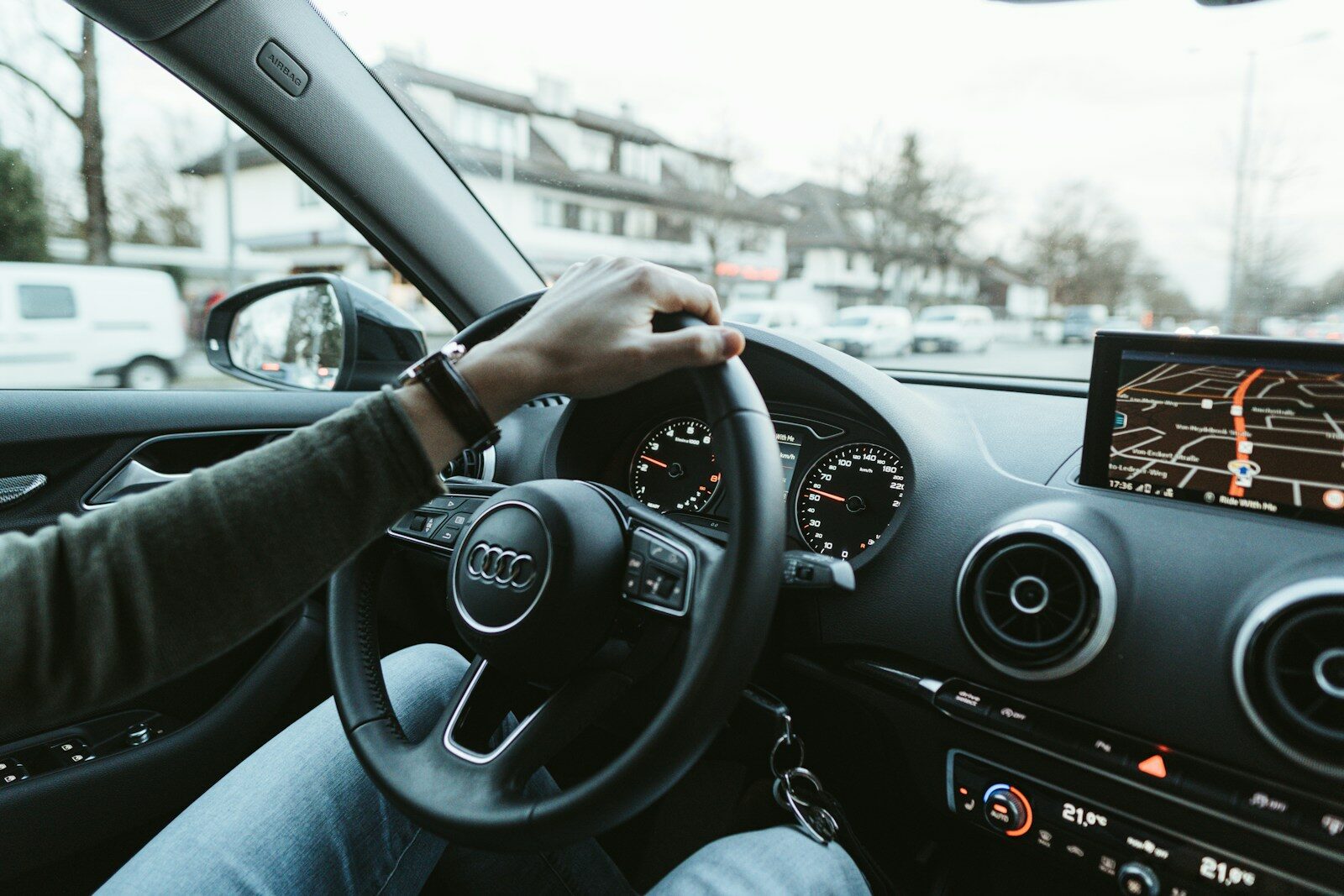
Moving to Hamburg means making several practical decisions before you arrive. Where should you live? How will you get to work? And do you really need a car in Germany’s second-largest city?
For many people relocating to Hamburg, owning a car is optional. The city has an extensive public transport network, cycling routes and connections to surrounding towns. However, your decision will depend on where you live, your daily routine and whether you regularly travel outside the city.
There is another important consideration: if you plan to drive after relocating, you may need to exchange your foreign driving licence for a German one.
This guide explains how to get around Hamburg, when a car makes sense and what international newcomers should know before driving in Germany.
1. Can you live in Hamburg without a car?
Yes. Many residents manage their everyday lives without owning a car, particularly when they live in a well-connected neighbourhood.
Hamburg’s public transport network includes underground trains (U-Bahn), suburban trains (S-Bahn), buses and harbour ferries. These services connect the city centre with residential districts, workplaces, universities and many leisure destinations.
For your relocation, the key is to choose accommodation that works with your daily routine. A home close to a convenient train or bus connection can make commuting considerably easier.
Living without a car may suit you if you:
- Work or study in an area with good public transport connections.
- Live within walking or cycling distance of shops and essential services.
- Prefer not to manage parking, vehicle maintenance and insurance.
- Travel around the city regularly but only occasionally need to go further afield.
However, public transport may be less convenient if you work outside the city, finish late at night, carry specialist equipment or need to travel frequently to locations with limited connections.
Our advice: Before renting a property, check the journey from your potential home to work, school, university or training facilities at the times you will actually travel. Your address can make a bigger difference to your mobility than owning a car.
2. Public transport in Hamburg: What newcomers need to know
Hamburg’s public transport system is operated through the Hamburger Verkehrsverbund, usually abbreviated to HVV.
Depending on your destination, you can combine underground and suburban trains, buses and ferries. For many everyday journeys, this is a practical alternative to driving through busy streets.
The HVV journey planner and hvv switch app can help you check connections, departure times and available tickets.
If you are moving to Hamburg for work, compare your commuting options before deciding where to live. A property that appears close to your office may still involve several changes or a longer journey than expected.
Is the Deutschlandticket worth it?
The Deutschlandticket costs €63 per month in 2026 and provides access to eligible local and regional public transport throughout Germany, generally in second class. It does not cover long-distance ICE, IC and EC trains.
It can be useful if you regularly commute, travel around Hamburg or visit other German cities by regional train.
The ticket is offered as a subscription, so check the cancellation deadline and terms before purchasing. The HVV currently allows cancellation up to the 10th of the current month.
For occasional journeys, individual tickets may be more suitable. If your employer offers a subsidised transport pass, check whether you qualify.
Official information is available on the HVV Deutschlandticket website.
3. Is cycling a good alternative to driving?
Cycling can be a convenient option for short and medium-distance journeys in Hamburg. The city has dedicated cycle routes and infrastructure in many areas, and a bicycle can be particularly useful for trips where public transport requires a detour.
Depending on the route and traffic conditions, cycling may also be quicker than driving.
Before relying on a bicycle for your daily commute, consider the distance, weather, road conditions and availability of secure bicycle storage. Hamburg’s rain and wind can make some journeys less comfortable, particularly during the colder months.
If you are new to the city, try your route before committing to a daily cycling routine.
Cycling can also help you explore your new neighbourhood, discover local shops and become familiar with the area around your home.
4. When does owning a car make sense in Hamburg?
Although you can live without a car in many parts of Hamburg, there are situations where having one is useful.
You may want to consider a car if you:
- Commute regularly to a workplace outside the city.
- Live in a suburban area with limited public transport connections.
- Travel frequently to other towns or rural areas.
- Need to transport sports equipment, work materials or bulky items.
- Have family commitments that require several journeys each day.
- Prefer the flexibility of driving for regular weekend trips.
There are also costs to consider. Buying or leasing a car involves more than the purchase price or monthly payment. You should account for insurance, vehicle tax, fuel or charging, maintenance, parking and any financing costs.
In central Hamburg, traffic congestion, roadworks and limited parking can make driving less convenient than expected.
If you only need a car occasionally, consider car-sharing or short-term rental services before committing to ownership. The hvv switch app also provides access to selected mobility services.
What about parking?
Parking conditions vary significantly between neighbourhoods. Some properties have private parking, while others rely on public spaces or paid parking facilities.
Before signing a rental agreement, check whether parking is included, whether additional charges apply and how practical street parking is in the area.
If you expect to use a car every day, include parking availability in your accommodation search rather than treating it as an issue to resolve after moving.
5. Exchanging your foreign driving licence in Germany
If you are relocating to Hamburg and intend to drive, check whether your current driving licence remains valid after you establish residence in Germany.
The rules depend on the country that issued your licence, the licence category and your circumstances.
Driving licences issued in the EU or EEA
Driving licences issued by EU and EEA countries are generally recognised in Germany. For standard passenger-car licences, exchanging the document is usually not required simply because you have moved to Hamburg.
However, different rules may apply to certain professional driving categories, including lorry and bus licences, and to licences approaching expiry.
Check the official requirements if you hold a professional licence or have an unusual licensing situation.
Driving licences issued outside the EU or EEA
If your licence was issued outside the EU or EEA, you will generally be able to drive in Germany for up to six months after establishing the relevant residence, subject to the applicable rules.
After that period, you normally need a German driving licence to continue driving.
Some countries benefit from reciprocal recognition arrangements that simplify the exchange process. Depending on the issuing country and licence category, you may be exempt from one or both theoretical and practical driving tests.
Other applicants may need to pass examinations before receiving a German licence.
Do not assume that every foreign licence is treated in the same way. You’ll need to check the requirements for your specific issuing country with a specialist.
What documents may be required?
Depending on your situation, the application may require:
- A valid passport or other accepted identification document.
- Proof of your registered address in Hamburg.
- Your original, valid foreign driving licence.
- A biometric passport photograph.
- A translation of your licence, if required.
- Evidence of previous residence in the country that issued your licence.
- A vision test or first-aid certificate, where applicable.
- Confirmation of an appointment with the competent authority.
The exact requirements depend on your licence and circumstances. The Hamburg authority will determine whether a translation, test or additional document is needed.
You can find the relevant information through the official Hamburg driving licence services.
How long does the exchange take?
The time frame depends on the application, the issuing country and whether examinations are required.
Hamburg’s published guidance indicates that producing a German licence may take around three to four weeks in some cases. Other procedures, particularly those involving tests or additional checks, can take longer.
For this reason, start checking the requirements before the six-month period expires. If you need to drive regularly for work or family reasons, do not leave the process until the last minute.
Important: An international driving permit does not automatically replace the need to exchange a foreign licence when German law requires it. Always confirm what applies to your circumstances.
6. How to choose where to live based on transport
Transport should be one of the factors you consider when choosing accommodation in Hamburg.
Rather than looking only at rental prices or the appearance of a neighbourhood, consider how your home will work with your everyday schedule.
If you work in the city centre: Look for convenient public transport connections and check the walking distance to the nearest station.
If you work outside Hamburg: Compare commuting times by car and public transport. A location that works well for central Hamburg may be less practical for a daily journey to an industrial or business site elsewhere.
If you are moving with children: Consider school journeys, childcare, shopping and access to parks. Multiple daily trips can influence whether a car is useful for your family.
If you are an athlete or sports professional: Check the distance to training facilities, the availability of late-night transport and whether you need to carry equipment regularly.
If you travel frequently: Consider access to Hamburg Airport, the main railway stations and the transport connections you will use most often.
It is worth testing your likely commute at realistic travel times before signing a rental agreement. This can help you understand whether public transport will be sufficient or whether a car would make your routine easier.
7. Other practical steps when moving to Hamburg
Transport is only one part of settling into Germany. Depending on your circumstances, you may also need to organise address registration, accommodation documentation, health insurance, banking and other administrative matters.
Address registration, known as Anmeldung, is particularly important. People moving into a home in Germany generally need to register their address within two weeks, subject to the rules and exceptions that apply to their situation.
It is useful to plan these tasks together. For example, your accommodation arrangements may affect your registration, while your new address can be relevant to applications for local services.
If you are moving with a partner or children, include their needs in the same plan. School arrangements, childcare, healthcare and commuting can all influence where you choose to live.
A clear checklist helps you understand which tasks need to happen first and which can be handled after arrival.
How La Relocation Group can help with your move to Hamburg
Relocating to a new country involves practical decisions that are closely connected. Your accommodation affects your commute, your daily routine influences whether you need a car, and your personal circumstances determine which administrative steps apply.
La Relocation Group supports individuals, families and companies with international relocation and lifestyle services. Depending on the destination and your requirements, support may include accommodation assistance, administrative preparation and help coordinating practical arrangements after arrival.
For employers, coordinated relocation support can also help reduce the operational workload associated with bringing international employees to Germany.
The aim is to help you prepare for the move with a clearer understanding of the steps involved and the decisions you need to make.
Planning your move to Hamburg? Contact us to discuss your relocation requirements and the support that may be available for your circumstances.
Frequently asked questions about moving to Hamburg
Do I need a car to live in Hamburg?
No. Many residents manage their daily journeys using public transport, cycling and walking. A car may be useful if you live outside well-connected areas, commute to locations with limited transport options or regularly travel with children or equipment.
Is public transport good in Hamburg?
Hamburg has an extensive network of underground and suburban trains, buses and ferries. For many residents, it provides a practical way to commute and travel around the city without owning a car.
How much does public transport cost in Hamburg?
The standard Deutschlandticket costs €63 per month in 2026. It covers eligible local and regional public transport across Germany, but not long-distance ICE, IC or EC services. Check the official HVV website for current prices and conditions.
Can I drive in Germany with my foreign driving licence?
That depends on the country that issued your licence and your circumstances. EU and EEA licences are generally recognised, while licences from outside the EU and EEA are subject to different rules and usually require an exchange after a limited period of residence.
Do I have to exchange my EU driving licence when moving to Hamburg?
For a standard passenger-car licence issued by an EU or EEA country, an exchange is generally not required simply because you move to Germany. Special rules may apply to professional categories, expiry dates and certain licensing situations.
How long can I drive in Germany with a non-EU driving licence?
For many licences issued outside the EU and EEA, the permitted period is up to six months after establishing residence in Germany. The exact rules depend on your circumstances and the licence concerned. Check the official Hamburg guidance before driving.
Do I need to take a driving test to exchange my foreign licence?
Not necessarily. Some issuing countries have recognition arrangements that allow licences to be exchanged without a new theoretical or practical test. Other applicants may need to pass one or both tests.
Is cycling practical in Hamburg?
Cycling can be a useful alternative for short and medium-distance journeys. Its practicality depends on the route, weather, road conditions and availability of secure bicycle storage.
What should I consider before choosing a home in Hamburg?
Consider your commute, public transport connections, parking availability, local services and family needs. If you expect to drive regularly, check the parking arrangements before signing a rental agreement.
Can a relocation company help me prepare for life in Hamburg?
A relocation company can help coordinate relevant parts of your move, including accommodation assistance, administrative preparation and settling-in arrangements. The services available depend on your destination and individual requirements.
Ready to plan your move? Contact La Relocation Group to discuss your relocation and settling-in needs.